
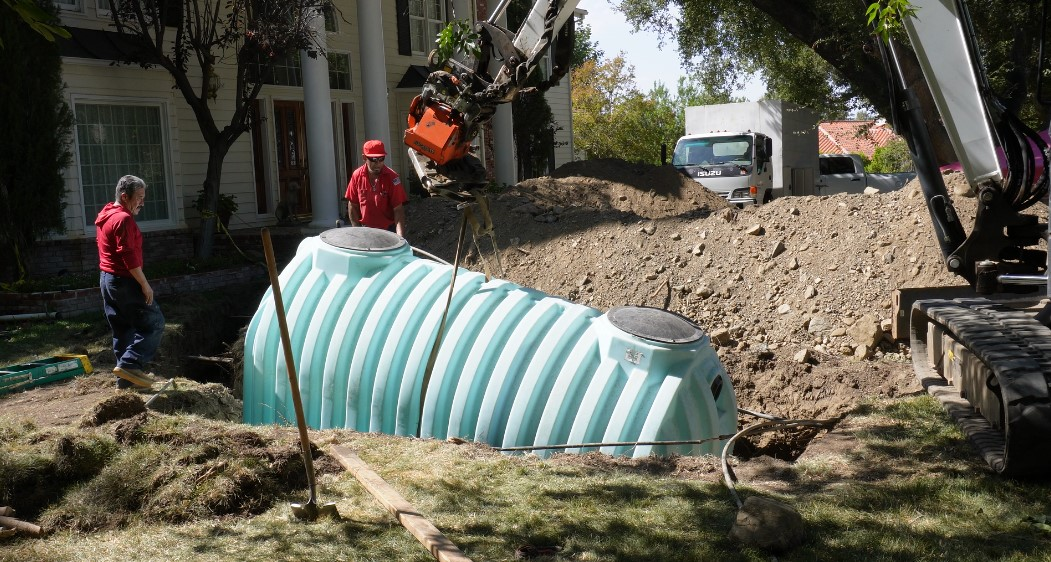
We recently worked alongside another plumbing contractor on the replacement of an old septic tank. When the existing tank was exposed, it was easy to see why it needed to go. It was an older steel-frame tank that had become completely corroded over the years and was ready for replacement.
The project took us three days, and our part of the job was handling the heavy equipment work. We excavated for the new tank, moved and managed the soil throughout the installation, and compacted the area as the work was completed. The other contractor handled the septic piping and customer coordination. Working together allowed each of us to concentrate on our part of the project.

The replacement was a 1,500-gallon polyethylene septic tank. One of the things I like about these projects is that the plumbing itself is only one part of a successful septic tank replacement. Excavation, safely handling a large tank, controlling the dirt, getting everything where it needs to be, and properly backfilling and compacting the excavation are all a big part of the job.